

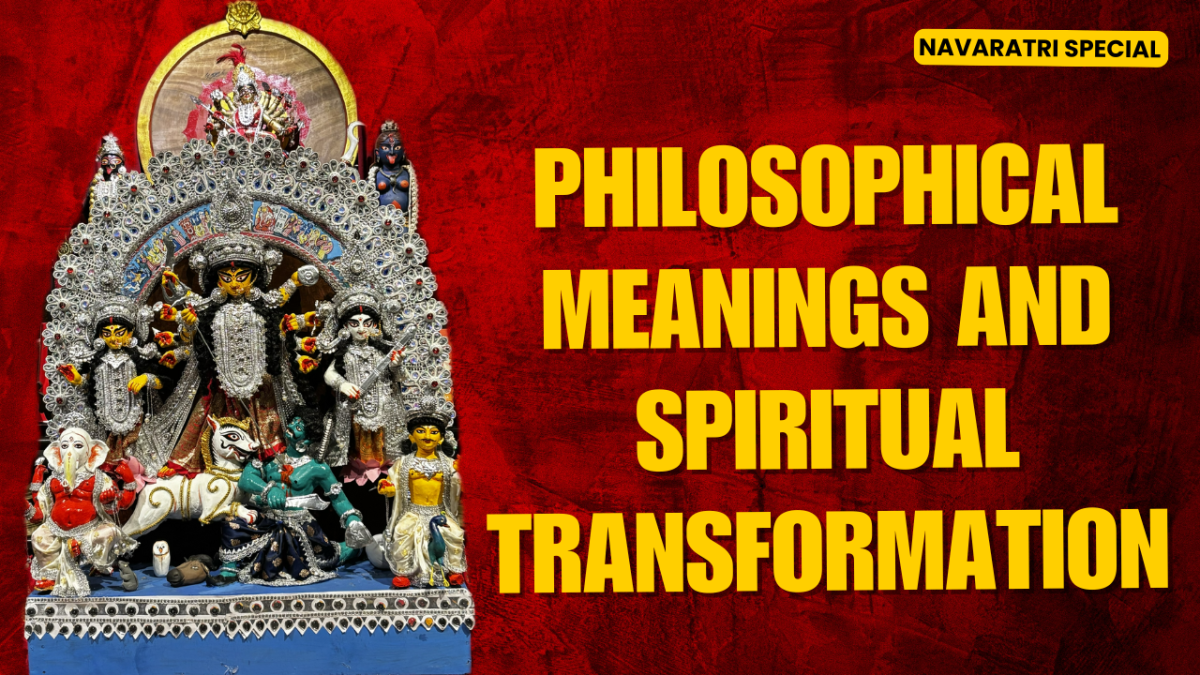
Navaratri's deepest significance lies in its representation of the soul's evolutionary journey toward ultimate liberation. The festival embodies a sophisticated spiritual psychology, mapping the systematic transformation of human consciousness from ignorance to enlightenment.
The three-stage progression reflects fundamental spiritual principles. The first stage, governed by Mahakali, involves confronting and destroying Tamas (inertia) represented by demons Madhu and Kaitabha. These symbolize desire (Kama), anger (Krodha), and greed (Lobha) – the primary obstacles clouding consciousness. This phase requires intense spiritual effort, like cleaning dirt from a mirror to restore its natural reflectivity.
The second stage, presided over by Mahalakshmi, addresses Rajas (activity/distraction) through overcoming Mahishasura and Raktabija. These demons represent the mind's restless, shape-shifting nature and the proliferation of desires. Mahishasura's constant form-changing mirrors how desires adapt and multiply when confronted directly. The solution requires addressing desire's root, not merely its manifestations.
The third stage, guided by Mahasaraswati, tackles Sattva's limitations through defeating Sumbha and Nisumbha. Even this "pure" quality can become an obstacle through spiritual pride and subtle ignorance. Sattva acts like transparent glass – allowing vision of truth while preventing direct contact.
This progression – from Karma Yoga (action) through Bhakti Yoga (devotion) to Jnana Yoga (knowledge) – represents the complete path of spiritual evolution. Each stage requires specific approaches: disciplined action removes impurities, devotional practice calms mental disturbances, and wisdom transcends all limitations.
The festival emphasizes that spiritual practice is never individual but cosmic. The aspirant doesn't walk alone but carries universal connections, making liberation ultimately universal rather than personal. Vijayadashami celebrates this cosmic victory, where the individual soul recognizes its eternal identity with the Supreme Spirit. This understanding transforms Navaratri from mere religious observance into a comprehensive spiritual technology for human transformation and divine realization.
Rate this Article
Your response to this piece
Discussion (0)
No voices yet
Be the first to contribute to this discussion.
Join the conversation
Share your perspective