

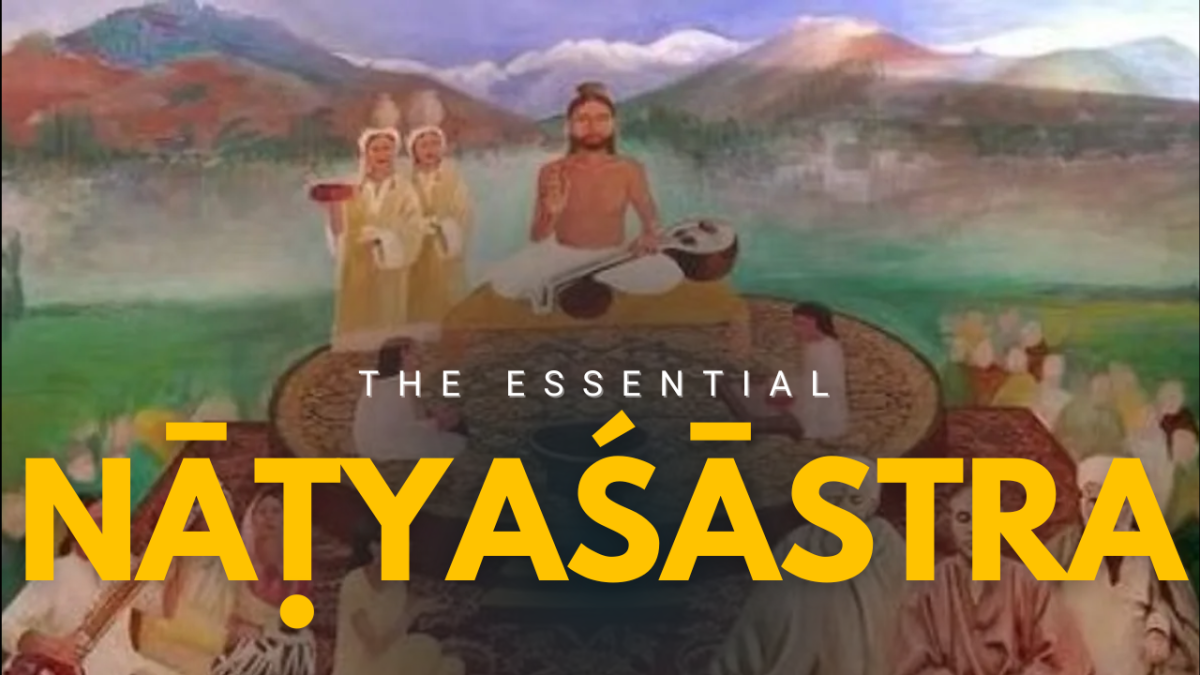
The Nāṭyaśāstra stands as a seminal treatise on Indian classical theater, encapsulating a comprehensive framework known as the Eleven Nāṭya Saṅgraha. This doctrine, elucidated across the various chapters of the Nāṭyaśāstra, encompasses fundamental concepts essential for understanding and executing theatrical performances.
“Rasa bhāva hy abhinaya dharmī vṛtti pravṛttayaḥ:
Siddhiḥ svarās tathātodyaṃ gānaṃ raṅgaś ca saṅgrahaḥ”
(Ch. 6, v. 10)
Each element of this doctrine contributes to the richness and depth of Indian classical theater, providing practitioners with a structured approach to artistic expression.
Rasa: In the sixth chapter of the Nāṭyaśāstra, Bharata expounds upon Rasa, the aesthetic sentiment that forms the core of dramatic experience. Rasa is derived from a combination of Bhāva (emotive state), Vibhāva (determinants), Anubhāva (consequent reactions), and Vyabhicārī Bhāva (transitory emotions). Bharata identifies eight primary Rasas, including Śṛṅgāra (erotic), Hāsya (comic), Karuṇa (pathetic), Raudra (furious), Vīra (heroic), Bhayānaka (terrible), Bībhatsa (disgusting), and Adbhuta (marvelous).
Bhāva:
Continue reading this discourse
You've reached the end of the free preview. Create a free account — or log in — to read the full piece.
- Unlimited access to all articles
- Listen with text-to-speech
- Bookmark & build your library
- Join the conversation
Free forever · No credit card required · Privacy Policy
Rate this Article
Your response to this piece
Discussion (0)
No voices yet
Be the first to contribute to this discussion.
Civilisational Fellowship · Discourse
Sign in to join the conversation
To preserve the rigor, thoughtfulness, and civility of literary discourse, comments are reserved for registered members of the Rik Amrit fellowship.