

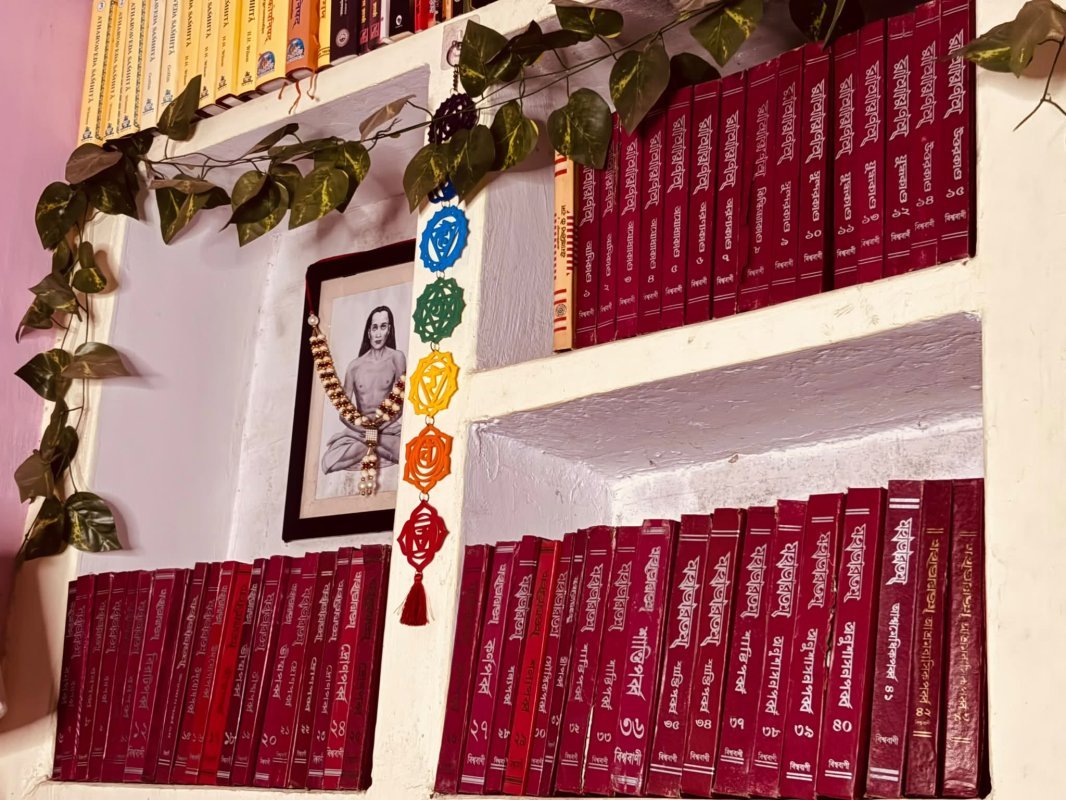
What are we really seeking when we read the Rāmāyaṇa? Are we looking for a historical account, a moral framework, a philosophical position, an ideological justification, or something far more profound?
Perhaps we need to revisit the very beginning of the Vālmīki Rāmāyaṇa.
The first verse introduces Nārada through the expression:
Tapah Svādhyāya Nirataṃ…
The description of one devoted to Tapas and Svādhyāya is not merely an incidental introduction. It offers an important philosophical entry point into understanding the text and the tradition from which it emerges.
The Rāmāyaṇa cannot be approached merely through the accumulation of opinions or the reinforcement of pre-existing beliefs. It demands a different kind of engagement. Its narratives, symbols and philosophical dimensions invite inquiry that eventually transcends the intellectual exercise of interpretation.
Consider Rāvaṇa’s tapasya and the boon he receives from Brahmā. Beyond the familiar narrative, there are esoteric dimensions that can be explored through the understanding of Yoga, Tantra and the subtle body. The piercing of the Brahma Granthi, for instance, offers one such interpretative lens. These dimensions cannot be adequately understood without engaging with the metaphysical understanding of Kuṇḍalinī Śakti.
The same Kuṇḍalinī Śakti manifests as Devī through different stages of its unfolding. Understanding this continuity requires us to look beyond fragmented interpretations and engage with the philosophical and experiential foundations of the tradition.
This is precisely where our contemporary engagement with the Rāmāyaṇa often becomes inadequate. We have increasingly reduced it to ideological positions, political arguments, competing claims and literal interpretations. Sometimes, even those who claim to defend the tradition approach it with frameworks that leave little room for its deeper philosophical dimensions.
The Rāmāyaṇa is among the most difficult texts to decipher and truly understand. It is not simply another subject to acquire a degree in, another career opportunity or an instrument to establish one’s ideological position. Academic study has its place, but it cannot be mistaken for the entirety of engagement with the text.
What is required is Svādhyāya.
Svādhyāya is not merely the study of scriptures or the accumulation of knowledge. It is the study of the Self. It is an inward process of inquiry, contemplation and realisation. It requires us to move beyond the limitations of buddhi, beyond the compulsions of opinions and beyond the need to validate our existing beliefs.
The Rāmāyaṇa does not become meaningful merely because we defend it, interpret it or claim ownership over it. Its deeper dimensions become accessible through sustained inquiry and inner realisation.
Perhaps we need fewer arguments about what the Rāmāyaṇa ought to mean and a much deeper engagement with what it actually reveals.
The purpose is not merely to understand the Rāmāyaṇa as a text, but to approach it as a journey of Svādhyāya.

Rate this Article
Your response to this piece
Discussion (0)
No voices yet
Be the first to contribute to this discussion.
Civilisational Fellowship · Discourse
Sign in to join the conversation
To preserve the rigor, thoughtfulness, and civility of literary discourse, comments are reserved for registered members of the Rik Amrit fellowship.